Friday, February 2, 2018

Vegetarian in Madrid


Madrid is a beautiful and grand city, full of art, life and food! I spent five days there visiting sites, museums and art galleries, and eating well with my vegetarian family. Naturally every day started with breakfast, and breakfast sets (generally at special prices in most cafes) include coffee (some places have soy milk), freshly squeezed orange juice, and then a choice of a pastry, or a croissant with butter and jam, or tostada, toasted bread (like baguette) with a tomato salsa, olive oil and salt. For an Italian it may seem strange to start the day with something that reminds me of bruschetta, but it is great if you like a savoury breakfast, or if you are vegan. Anyway, I tried and I liked it! 


Another discovery for me was that with hot chocolate you can have not just churros but also porras (the difference is that porras are bigger, straighter and more chewy). Also, both churros and porras are not sweet like the churros I had in South America, in fact they are quite bland and really need to be dunked in chocolate (in my opinion). Do not try to get them with coffee, it doesn't work, they need chocolate!!


We stayed at the Hotel Mediodia, conveniently located next to the Reina Sofia Art Museum, which we visited twice (second time in the evening, when is free entry), plus the annexe in the Parque del Retiro (alway free). It was quite amazing to know that we were sleeping only about 200 m aways from Guernica.


Although it is not possible to take photos of Guernica, all other exhibits can be photographed and there is some amazing art!

Josep de Togores, Formes, Reina Sofia Art Museum


Joan Miró, Femme et chien devant la lune, Reina Sofia Art Museum


Back to food now! Fish and meat abound, of course, but many restaurants that serve paella will also make a vegetable one, suitable for vegans, very nice and filling and a must try, sadly the cost is the same as all the other paellas with animal bits in it, and I don't understand why, but I was glad to have the choice and did not raise the questions with the restaurants involved - they make money out of tourists after all.


Again for Vegans: if it is hard to find food in restaurants just stock up in stores and supermarkets and take back your bounty to the hotel: bread is yummy, and in supermarkets you can choose among a large variety of gazpachos, plus there are nuts and seeds and fruit to die for, and fantastic guacamole. For those with a sweet tooth there are several almond paste sweet breads made with a variety of fruit (I tried the almond and apricot one and it was amazing, a calorie bomb, but surely full of proteins!).


If dairy and eggs are ok, then the pastry selection is huge, and so are the torrons and all the traditional sweets which also make beautiful souvenirs to take home. I especially liked the xocolada a la pedlar d'Agramunt, artisanal dark chocolate flavoured with vanilla or cinnamon (or plain) to use to make hot chocolate.


A must visit for gourmands is the Mercado de San Miguel, where you can buy food or eat tapas all day long!


Banderillas are skewered pickles and olives, delicious, but make sure you ask for those without anchovies.


Tapas can be meaty and fishy too, but there are vegetarian options. In fact we basically just had Tapas for lunch everyday, and that was enough! Tapas bars are the best, but one day, while we were visiting the city centre we ended up in Tapa Tapa, a cheap and cheerful 'fast food' tapa chain, where we had Pimientos del Padron Fritos (best vegan tapa, fried peppers, mostly mild with some surprise hot ones in the mix), Patatas Bravas (everyone knows these), Brie Frito con dos sesamos y marmalade de tomatoes (fried brie coated with sesame seeds and sweet tomato jam), Alcachofas Fritas (fried artichokes) and more... after all that fried food we could not possibly had lunch as well!
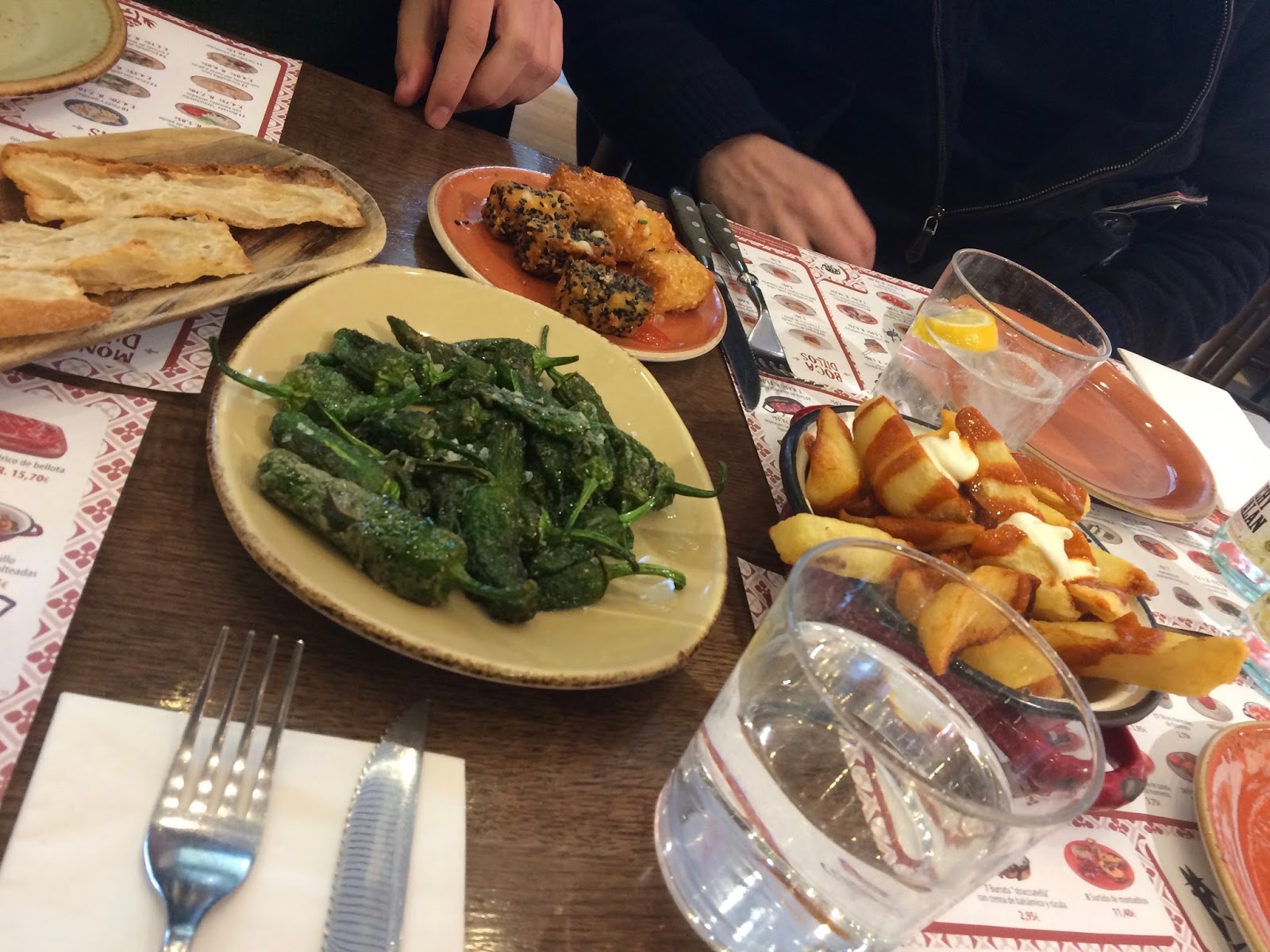

Tapas bars and restaurants may have less choices than Tapa Tapa, (especially if small) but you can always find a potato tortilla, cheese (manchego is the best!) and olives.


We also had to try sangria, even if it was winter! This was at La Taperia, which felt a bit like a 'family restaurant' but was choosen because they had veggie burgers (and a few other veggie dishes - which you can find in the English menu under 'starters'!). Nothing special but easy and filling after spending a few hour in the Museo del Prado (near by, and AMAZING). 


More city tips: although several museums and the Parque del Ritiro were at walking distance from our hotel, for two days we also used the bus city tour, very convenient to reach places like the Royal Palace or to get to the modern northern part of the city (especially since it was winter and quite cold). On the last day we also did a walking tour of the old city centre (one of those free walking tours where you leave a tip at the end). It was cool as, and good for practicing our Spanish (although there are also tours in English). We also managed quite a bit of shopping in the city centre (including in the department store El Corte Inglés, which has a lovely food court). 


To end out trip on the last evening we went to a cute Vegan restaurant. Distrito Vegano is not only cute but also tiny, so it pays to book. Luckily we ate earlier than the locals, so usually there is no problem in finding a table at 7pm, as most diners don't show up until after 9pm or much later.


No traditional Spanish food though: Quinoa (vegan) cheese burger, Chilean hot dog, Nachos, Red velvet cake (this was nice and creamy!), panna cotta, chai latte... basically it felt like any other Vegan menu you could find in Auckland or New York... I would have preferred a Vegan version of Tortilla, or some traditional Vegan Spanish dishes, but this is not a place for tourists, and the locals probably prefer vegan burgers and other 'international' vegan treats. Still, the food was good and we liked the place, plus we could order anything from the menu without having to ask the usual questions about ingredients.


Bye bye Madrid, we had a great time!


Photos by Alessandra Zecchini ©

Thursday, February 1, 2018

Risotto with radicchio


One of the many joys of winter in Italy is the abundance of radicchio, and there are so many varieties, like this long and compact beauty, perfect for risotto.


I also found my Mum's old green pot (about 50 years old) which she always used to make risotto, and discovered that it is suitable to my new Italian kitchen's induction cooker. It may look a bit battered but it cooks beautifully!  


To start chop a white onion and sauté with butter (plenty of butter!) then add the chopped and rinsed radicchio with a pinch of salt, put the lid on and simmer, stirring from time to time, until the the radicchio is all wilted and doesn't taste too bitter.


It should take about 20 minutes on low, and look like this (with a bit of juice). Now add the arborio rice,  (I made risotto for 8 with about 600 g of rice, only one onion and one radicchio!).


Stir until the rice is hot and then start adding the vegetable stock, ladle by ladle as needed, you will need about two litres of it.


Keep stirring and adding stock until ready. When working with large quantities of rice it is better to rinse it first to remove a little starch, otherwise it will become too hard to turn, and too sticky.

Risotto with Radicchio is a great Italian classic, very popular in Veneto and Emilia Romagna (the best radicchio is from Treviso). Possibly in Veneto you would accompany it with one their fine whites, but in Emilia I paired it with a Pignoletto and it tasted great! Grated Parmigiano or Grana Padano are optional. Enjoy!


Photos and Recipes by Alessandra Zecchini ©

Wednesday, January 17, 2018

Back to my village in Italy and making tortellini without meat


Back to my home village and to my roots, making tortellini with 92 years old Agnese and her son Antonio. Agnese has been making fresh pasta since she was a child, like all the women in these mountains, and before Christmas a number of friends and village women come over to make tortellini with her, because you don't make tortellini alone, you do it in company, as you have to work fast filling and folding and you need many tortellini (at least 30 per plate if eaten in broth, more if served with cream). So you work, and chat at the same time, and perhaps it is this conviviality that makes the women of this area live a long life.


I remember my grandmother and her sister making pasta by hand, with a long rolling pin. Today Agnese (my grandma's cousin) uses a pasta machine because she has arthritis, and her sono Antonio helps her.


But she can still cat and fold the tiny tortellini!


I often make tortelloni, which are bigger and with a vegetarian filling, so it was great to make tiny little tortellini again, hundred of tortellini!


This is to give you an idea of the size.


At home I decided to make them again with my kids, and with a non-meat filling. For the fresh pasta the ratio is 1 medium-large egg for 100 g of flour, considering that 100g of flour make about 2 servings of tortellini. For the filling I made some fresh bread crumbs with stale bread, mixed with a little beaten egg and milk, and added tons of grated aged Parmigiano Reggiano, then black pepper and freshly ground nutmeg (adjust with salt to taste, but since I used plenty of Parmigiano I didn't need any). The filling should be quite firm and easy to roll into little balls. 


Roll one piece of pastry at the time, so it doesn't dry up, then cut it, add the filling, fold into triangles and then each one around your finger into a tortellino. Agnese cuts the tortellini shapes by hands, so some of the shapes differ lightly in size (and may fold differently) but for home use nobody worries here: it is the content and final taste that counts. Restaurants often follow suit, bus pasta shops tend to make all the tortellini the same size so they look better. I got a tortellini square cutter which helps  with the size, and the off cuts of pasta are kept aside too, these are called maltagliati (literally badly-cut) and they are used for soups like pasta e fagioli or minestrone (below you can see them in the tray on the side).


And here are our meatless tortellini! I served them with a vegetable broth, buonissimi!


Photos and Recipes by Alessandra Zecchini ©

Thursday, January 4, 2018

Ferrara, city of art, bicycles and 'coppie'


Ferrara is a small but beautiful city in Italy, in the region of Emilia Romagna. It has been said to be one of the most liveable cities in Italy (and the world) and the best for cycling. Everyone has a bicycle and young and old use it daily to go to work, to school, for shopping... for everything!


The city has a long history, beautiful elegant buildings and many cobbled streets, it is perfect for a day visit, and has been not invaded by tourists like nearby Bologna. 


Girolamo Savonarola was born in Ferrara in 1452


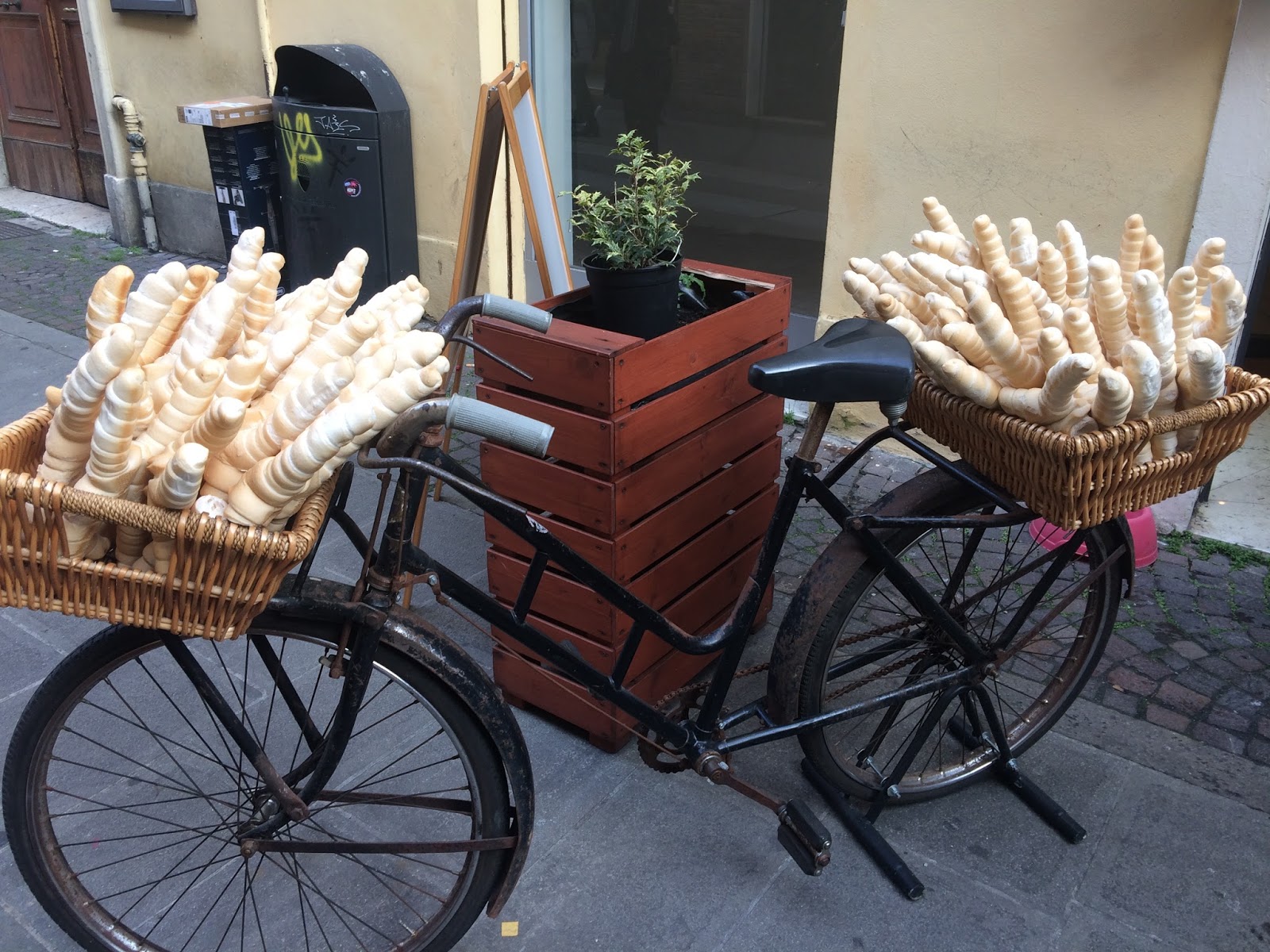
The food is delicious, like everywhere in Emilia Romagna, and the 'symbol' of the city is its bread, called 'coppie'. There are many types, long and short, and we tried a few: the centre has a soft white dough and the 'legs' are crunchy.


Photos by Alessandra Zecchini ©

Sunday, December 31, 2017

White Christmas in the mountains in Italy


This year we spent Christmas in Italy, in my old village in the Appennines, we arrived on 11 December and after a few days we were blessed by snow. I loved looking out of the window and seeing snowdrops, animal footprints on the ground and little birds coming to the window for a break.


 My village is Sestola, in the province of Modena, looking good with a white mantle.


Preparing the Christmas Tree


 Sestola at night

Winter delights

The best thing was skiing on Christmas Day, up in Passo del Lupo. Glorious day and good snow. 


I also did a few walks around the Lago della Ninfa, next to Passo del Lupo.


A view of the Cimone Mountain, the second highest mountain in the Apennines.

Near home there are also a few lovely places where to walk and enjoy the winter 'wonderland'. A great end to 2017, and a lovely experience for the family.


Photos by Alessandra Zecchini ©

LinkWithin

Related Posts with Thumbnails