Sunday, August 5, 2018

Niue, eating vegetarian from a plantation


Last month we returned to Niue for a holiday, and one of the first things we did was a Plantation Tour with Tony, like seven year ago, to stock up with local produce for a plant based diet. Naturally we started with some fresh coconut to drink.


And some marshmallow coconut to eat. 


We took back quite a lot of young coconuts, from a small one I could get two big glasses of coconut water, if it was a bit bigger two and an half glasses.


After drinking we used the tender flesh, you can just eat it as it is, or use it in cooking (the best was to pan-fry it with olive oil and smoked salt and eat it as 'vegan bacon'. Then we gave the shells to the cat and it cleaned it up! Never seen a cat eating coconut!


Click here for more coconut recipes and creations in Niue.


Next was taro, so much taro, white and pink!


And cassava, a white and a yellow type (I prefer the yellow).


And a type of wild spring onion, very tasty. We also got some basil.


Ginger abounds too, if you are keen.


And this is our bounty!


Taro is very starchy and filling, I made some salads, one with boiled taro, olive oil, salt, basil and spring onions. 


And one with boiled taro, mayo and spring onions.


I also boiled the cassava and then roasted half with olive oil and salt, while the other half I mushed and mixed with falafel mix to make veggie burgers (ok, they don't look 'pretty' but they were pretty good). More recipes here.


No much tropical fruit around a part from bananas, papaya and coconut, but I loved the papayas with a drizzle of Niue Honey and lime or lemon juice.


And for dessert: papaya, banana and young coconut flesh fruit salad, with rum and a little sugar. 


And here something we DIDN"T eat: Uga crab.


And some pretty fish!


Photos and Recipes by Alessandra Zecchini ©


Monday, July 2, 2018

Stufato di verdura - vegetable stew


I love chopping colourful veggies, what a treat! 

For this stufato (like a casserole) I used red onions, celery, red, green and yellow capsicums and carrots. Gently sauté the vegetables with olive oil, then add plenty of tomato passata and salt to taste (or an organic vegetable stock cube). Cover and simmer on low for a long time (the longer the better), adding a little water if needed.


A couple of minutes before turning off the heat add some fresh basil leaves and a little more olive oil, plus salt to taste. Enjoy hot or cold.


Photos and Recipes by Alessandra Zecchini ©


Friday, June 22, 2018

Pitako - coconut and banana bread from Niue


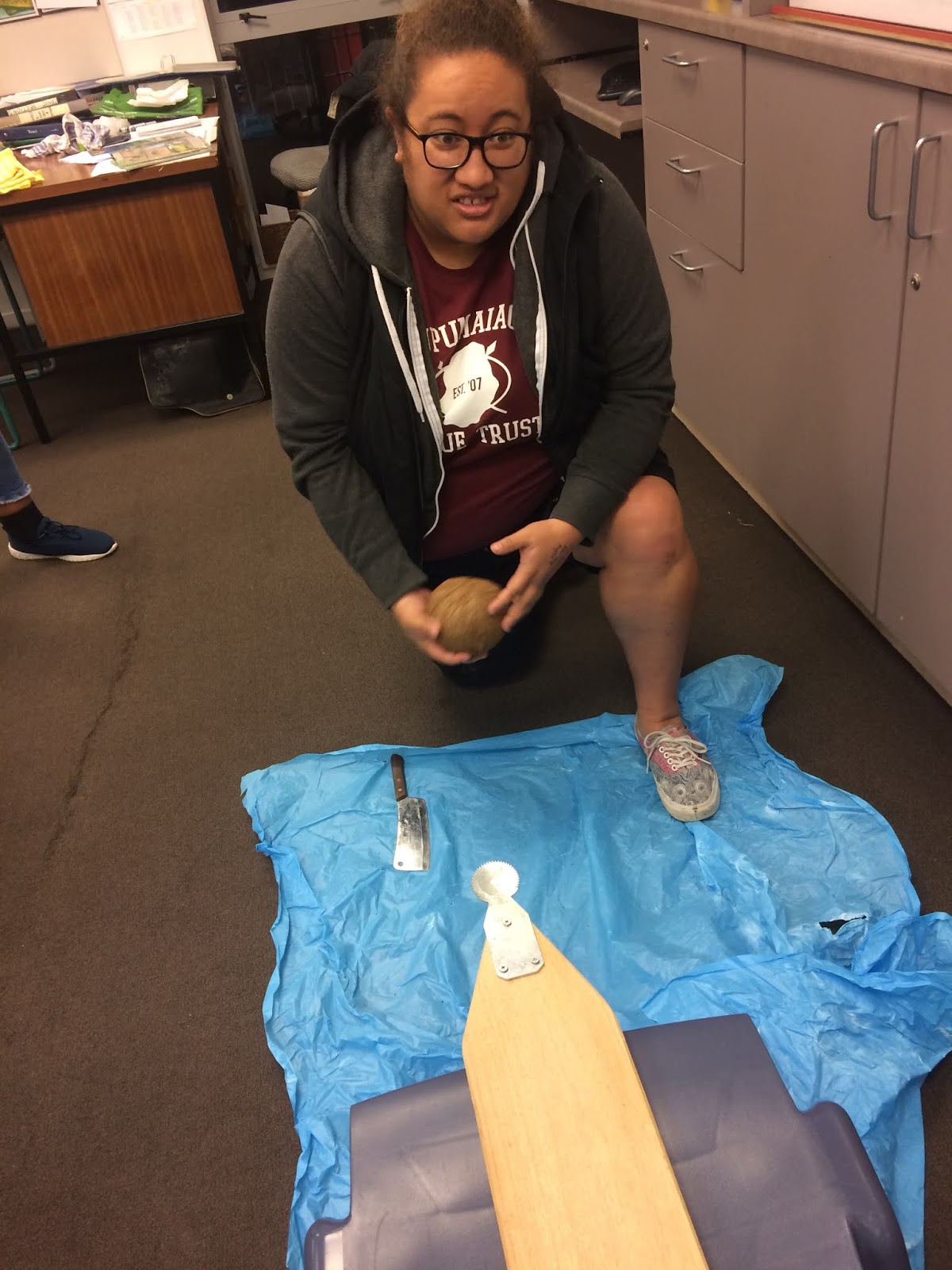
I have been attending Niue language classes at the Pasifika Education Centre in Auckland, and a few weeks back we also learned to cook Pitako, a type of 'bread' made with grated coconut and bananas (green and ripe) - only! Obviously vegan, sugar and gluten free, very Paleo :-). 


Ingredients: fresh coconut to grate, green bananas, ripe bananas.


Volu e niu ke he apa
Grate the coconut 


Fakapelapela e tau fua futi momoho, fole e tau fua futi ti holo kehe apa.
Mash the ripe banana, peel and grate the green banana into a large bowl.


Lafi fakalataha e futi holo mo e futi momoho mo e niu volo.
Mix the grated green banana, mashed ripe banana and grated coconut.
(for a sweeter pitako add more mashed banana, add more green banana for a less sweet Pitako, I also put a few drops of lemon juice, and next time I will add a pinch of salt - these are not in the recipe but my own additions).


Loegi e laufuti mo e fakatoka e foila mo e taga tao kai.
Hafi e Pitako.
Prepare oven bag and foil or banana leaf. 
Wrap.
In class we used tin foil and baking paper, but at home I had banana leaves (need to be washed and scorched over a flame to soften and remove the central vein to soften. I used the banana leaves to wrap, and then also tin foil on the outside.


Tao ke taha moe hafa kehe ua e tala.
Bake for 2 and an half hours.
(I baked for one hour at 180C, then turned the oven off and left inside for the night, it turned out fine!)


Kai vela poke kai momoko, hahau.
Take out, eat hot or cold.


Taumofa!
Dig in!


Photos and Recipes by Alessandra Zecchini ©

Monday, June 11, 2018

Banana and raspberry smoothie, and things from the garden


The last of my own grown bananas, perfect for smoothies, just added frozen raspberries and water, so sweet and delicious!


In the garden the friarielli (cime di rapa) are growing


 and the broccolini

  and cavolo nero

Hibiscus in pots


Winter is coming, time for warm slippers and pumpkin soup 

Photos and Recipes by Alessandra Zecchini ©

Friday, May 25, 2018

Wholemeal fresh pasta - pasta fresca integrale


Wholemeal fresh pasta is delicious! I made it with Agnese and her son Antonio, they get the flour from a local mill, organic and all :-). First you need to pass it through a sieve.


Leave the bran behind, this will be for the chickens, they make the eggs for the pasta!


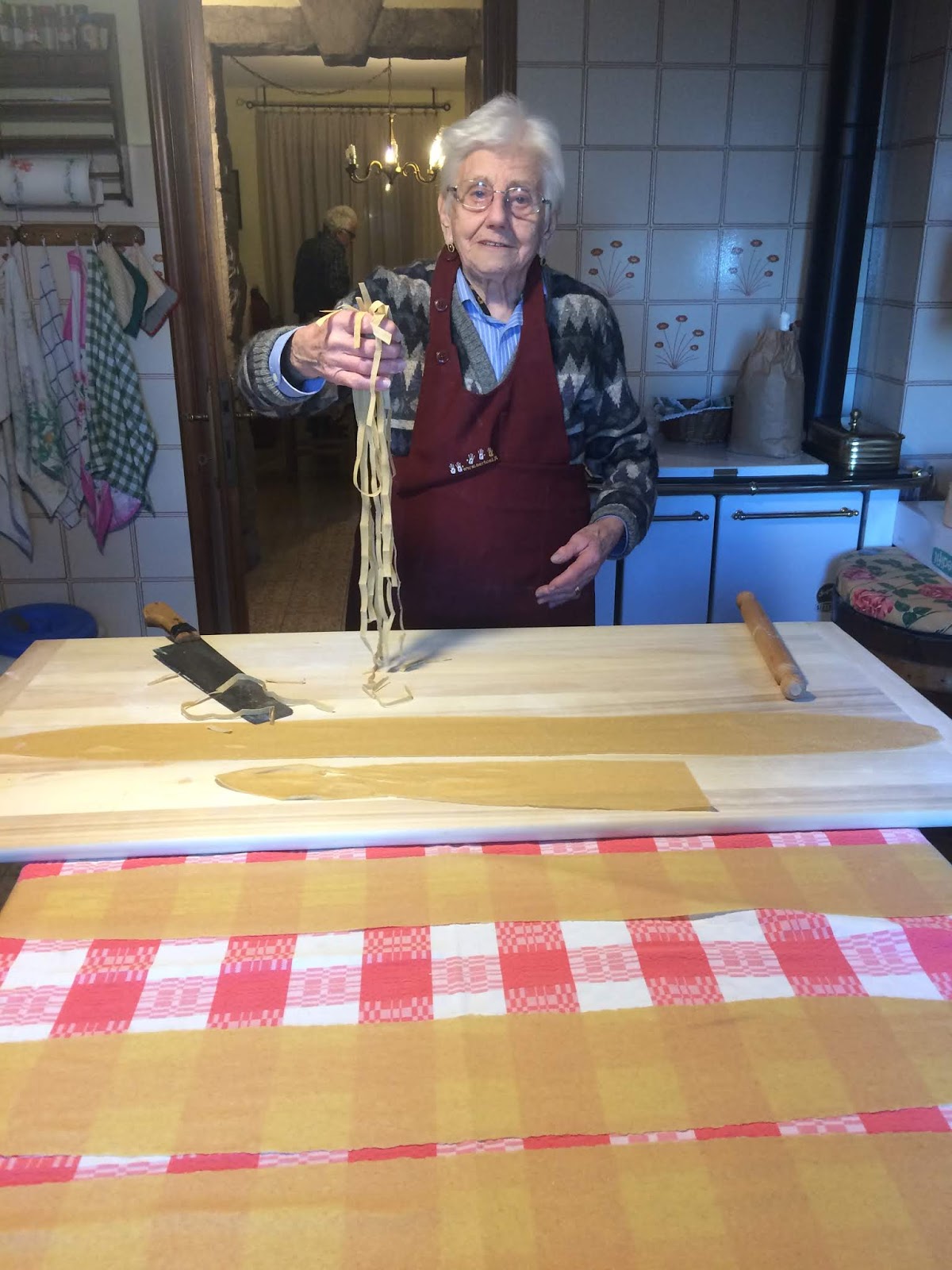
And this is Agnese's knife to cut tagliatelle and maltagliati.


Then you make the dough, usually for  each 500g of white flour I use five eggs, but for wholemeal pasta you need more, about six or seven eggs. Of course you can also mix wholemeal and white flour, in any case, the dough was done by machine and you can see if it is the case to add an extra egg or not, it all depends on the egg size and if the dough looks too dry. Once the dough is ready Agnese cuts it...


And then rolls it so it is ready to go through the pasta machine.


From the largest setting to the thinnest roll roll roll!


Then fold the rolled pasta and cut into tagliatelle


Now maltagliati: fold the rolled pasta and cut the corners, this is Arantxa doing it:


Maltagliati is great for soups, like pasta e fagioli, or with a simple clear broth. Wholemeal tagliatelle goes well with thick and flavoursome sauces.


I made it with a mushroom sauce (porcini, garlic, tomato and cream), amazing!

Photos and Recipes by Alessandra Zecchini ©

LinkWithin

Related Posts with Thumbnails