Showing posts with label tea. Show all posts

Tuesday, July 19, 2022

Tè al ribes rosso - red currant tea


More than a recipe this is a tip: fresh red currants make a delicious tea, just wash the berries and add hot water, let them sit for 5-10 minutes and then serve, with lemon slices if you like, and sweeten if you wish (sugar, honey, maple syrup...)

  Photos and Recipes by Alessandra Zecchini ©

Tuesday, January 8, 2019

Onigiri with Poppies, cornflowers and nasturtiums, and a Poppy Tea


Many of the flowers I plant are edible, and this year I also have poppies! They are beautiful and delicate to look at, and perfect for the kitchen. You can also make tea (it is supposed to help you sleep) but just use a few petals, from one or two flowers... only if you know enough about herbalism and/or botany you can adjust the dose to your body type. The taste is a bit like rose tea, I just add a little hot water and then let it stand until cool (it is a hot summer here). 


The petals leave a beautiful pattern inside the cup :-). 


For the onigiri: Wash the sushi rice (or Japanese rice) several times in cold water, until the water runs clear, and then cook it by absorption. The doses are about 1 and 3/4 (three quarters) cups of sushi rice for 2 cups of water, but that depends on the type of pot. You need a pot with a good lid, or you will loose too much steam. I kind of regulate myself by ear now, since I know my pots and pans. Bring the pot to boiling point, lower the heat and simmer until all the water has been absorbed. While the rice is cooking pick the flowers and clean the petals well, you can rinse the cornflowers and nasturtiums, but not the poppy petals, if you need to just spray with water and pat dry. Cut the petals in small strips with scissor and set aside. Once the rice is ready pour it into a bowl, add some unrefined salt and toasted black sesame seeds and stir it with a wooden spatula. Taste to see if it is 'salty' enough for you, then let it cool down a little. Then add half of the petals and stir. Fill a bowl with cold water and wet your hands, then pick up a handful of rice and shape into a ball. Repeat. Roll the rice balls in the rest of the petals. Serve cold, with Japanese pickled and soy sauce.


And now some compositions from the garden. 


Photos and Recipes by Alessandra Zecchini ©

Friday, May 9, 2014

Tea Party at my place to raise money for Oxfam

Slow Food Waitakere High Tea to raise money for Oxfam
A Fair Trade Fortnight Celebration
 Sunday May 18th at 2pm
 The cost is a Koha for Oxfam

An exclusive afternoon tea experience with four delicious stations
Click here  to make a donation to Oxfam
 
Oxfam's Morning Tea (formerly Oxfam's Biggest Coffee Break) is enjoyed each May during Fair Trade Fortnight when people throughout the country get together to taste the Fairtrade difference and fundraise for Oxfam's work towards a fairer, safer, more sustainable world.
How does money raised at our Morning Tea help?
We want to raise $320 which is enough to help cover the cost of one year’s training in life-changing farming methods that can dramatically increase the amount of rice people are able to grow. 
Thinking of joining us?
Venue

Alessandra and Peter's 
783 West Coast Rd
Oratia, Auckland 
(please park on the road and walk down)
rsvp alessandra@clear.net.nz by 14 May.

About the Koha
We want to let our guests decide what feels right for them to contribute to Oxfam at our High Tea.
We know that contributions will honour the great work being done by Oxfam and the effort put in by Alessandra and the Slow Food Waitakere team in hosting this event.
Our goal is to raise at least $320.

Can't make it? 
You can still help just click here to make a donation to Oxfam.

Tuesday, October 8, 2013

Ochazuke, Japanese comfort food


When I was teaching Italian in Japan I once asked my students to tell me what was the typical Japanese dish they had for dinner, one answered ochazuke, and everybody laughed! Ochazuke meant that you lived alone, or your mum/wife was out for the night and you couldn't cook. Or that you run out of money! For homework they had to write a description of Ochazuke (in Italian) and the week after they came with their recipes and, most surprising for me, they all brought a sachet of flavoring for ochazuke, for me to try. The basic idea is to use leftover plain rice and top it with hot green tea, and then some toppings (and these where the sachets, a bit like furikake, but with green tea added, so that you just needed hot water). Most of the students in that class were young and lived by themselves, thus the need of quick comfort food, and they always had left over rice, and possibly a sachet of seasoning. I got to love ochazuke, but rather than seasoning from a sachet I use some chopped-up nori, some wasabi or ume plum, salted sakura flowers, dried shiso... anything I have at hand really, and then some green tea. 


Photos and recipes by Alessandra Zecchini ©

Wednesday, April 17, 2013

Yerba Mate Class


15 years ago I was in Argentina and I bought a mate and a bombilla to drink yerba mate. I saw many people drinking "mate" in the street and I really liked the look of the mate (gourd) and bombilla (straw), but I never used them. My husband was also presented a set a few years back, time that we learned what to do with it!

Until a week ago I thought that Argentinians were the biggest consumers of mate, but apparently the Uruguayans drink more of it. The kids and I took a class (offered by our Spanish language school La Herradura), it isn't a drink that children usually drink because it is very bitter, but it has no caffeine, and they could try a sip. In Uruguay they say that a kid becomes an adult when he/she brew his/her first mate tea alone. But is is mainly a convivial drink: everybody "sucks" the tea from the same straw, and there is a bit of a etiquette to follow.

After the class I went straight away to buy some yerba to take home (it is well packed so I guess that they will allow it into NZ), and now I just need to find a good thermos for the hot water, so I will be able to offer you a mate. :-)

Photos by Alessandra Zecchini ©

Tuesday, April 5, 2011

Quince Jelly, Plum Paste and a cup of Ginger Lemon Mint tea


Quince Jelly


Living in the bush means that I don't have many fruit trees, but from time to time I am lucky enough to get fruit from friend's trees.
One of my favourite has to be quince; it looks so retro and photogenic (ok, I am talking about my dress as well!) and I love quince paste! But this year I decided to make quince jelly, just for a change.


Cut the quinces and remove the pips, add the juice of half a lemon and then place into a pot with a little water. Cook until the quinces are a soft mush. Now you will have to place this 'mass' into a jelly bag or cloth (I use a cotton pillowcase which I bought just to make jellies) and hung it overnight over a bowl to collect the juices. Drip drip drip you will collect some lovely red-orange coloured juice, but do not squeeze the bag, or the jelly will become cloudy!


Measure the juice and add the same amount in sugar. Bring to boil and simmer for about 20 minutes. Test to see if the jelly is setting by picking up a little on a teaspoon: if it hardens when cold then the jelly is ready, otherwise boil it a little longer. Once ready pour into a rectangular container. After a few minutes skin the top (this will have all the 'scum' which rises to the surface and needs to be discarded).
Let the jelly set for a few days, then cut into cubes and serve.


Plum Paste


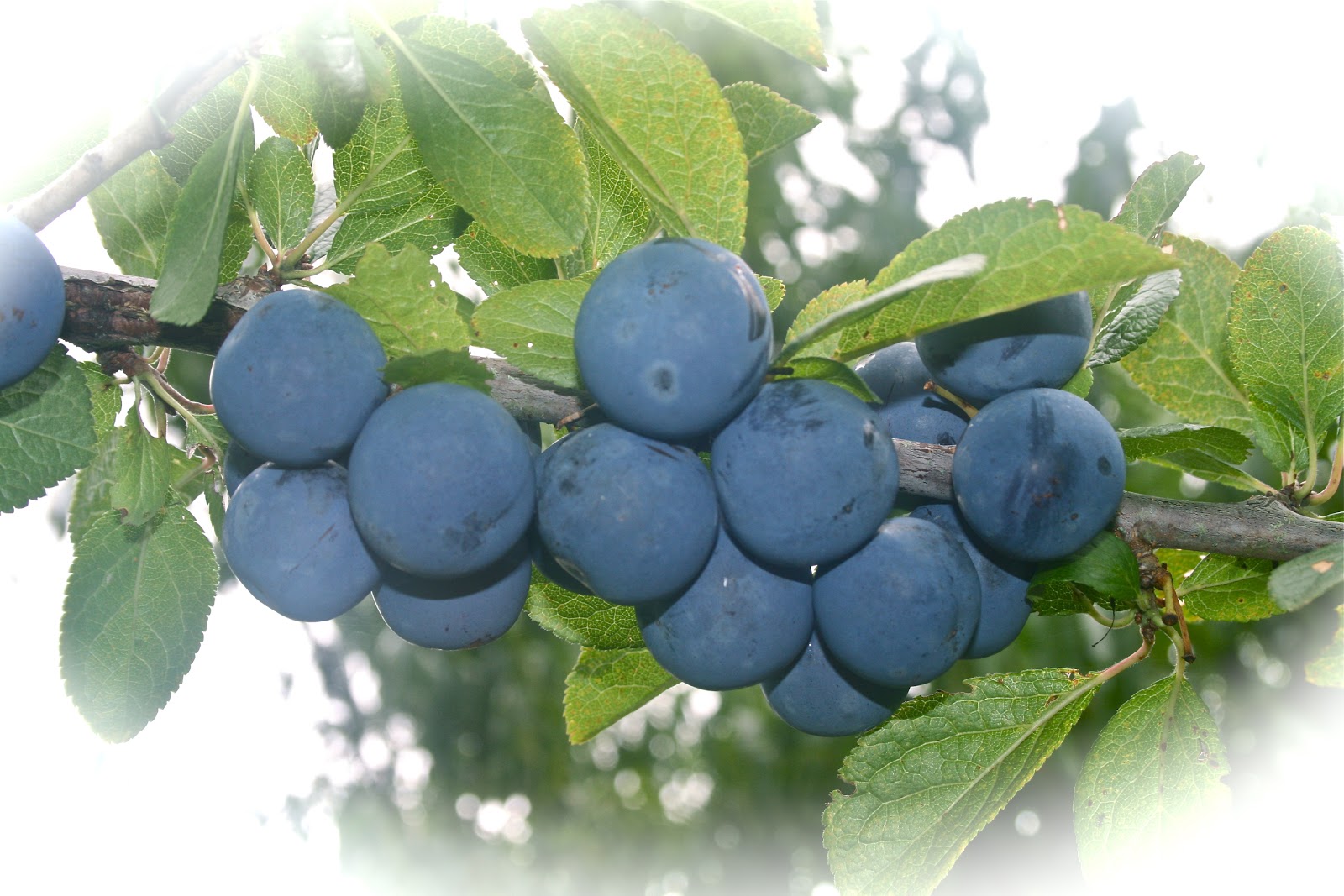
I got the plums from Arfi, when I went to her house for an Auckland food bloggers get-together.
Wash the plums and place them in a large saucepan with a little water. Bring the fruit to a gentle boil. 


Simmer the jam for about 20 minutes and then pass through a sieve, discarding the stones.
Put back into the pot and bring back to the boil.  Add the sugar (I used 60% sugar to the weight of the fruit) and stir well. Simmer until you are happy with the consistency (the more you cook it, the thicker the paste. You can also add an apple (not peeled, just chopped and pips removed) for a thicker paste. 


Place the paste into plastic containers, jelly moulds, cups... anywhere you can let it set for a few weeks. I used a silicon muffin tray.


When you need to use the paste tip it over a plate. I did this a bit too early (I couldn't wait to try it) and the top was still soft, but the longer you wait the harder it will become.


And for my cuppa: One of my favourite hot drinks: lemon, fresh ginger (peel it first) and a few mint leaves from the garden. All into the teapot, add boiling water and let it rest for 5 minutes. Serve with honey, if you like.


Photos and Recipes by Alessandra Zecchini ©

LinkWithin

Related Posts with Thumbnails